


WellDiver
4.768.00 Reviews
App Specs
- Version
- 0.12.2
- Updated On
- License
- Free
- Downloads
- 10,000+
- Developer
- LoadComplete
- Categories
- Adventure
- Platform
- Android
Screenshots


 Analysis by AppCompare
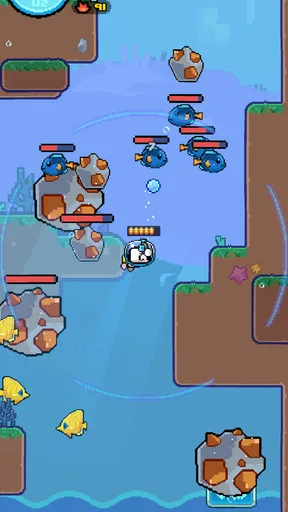
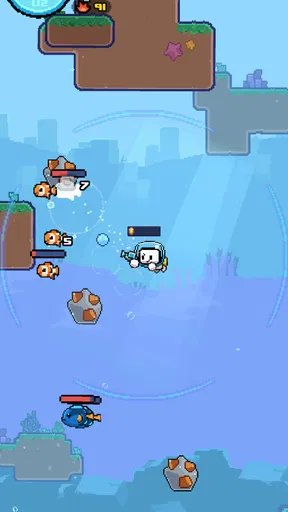
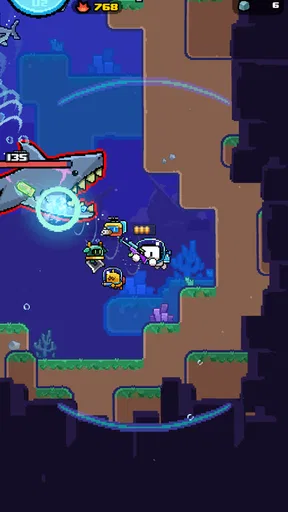
WellDiver is an adventure game from LoadComplete that puts its entire identity behind a simple but demanding idea: survive long enough to conquer the ocean and find a way out. I found that premise more useful than the brief store wording suggests, because it immediately gives each attempt a purpose. You are not just moving through a watery setting for atmosphere; you are trying to make progress while the environment keeps turning survival into the main problem.
That makes it a good fit for players who enjoy short, tense sessions and the feeling of improving through repeated attempts. It is free to start, rated for Everyone, and currently sits at a 4.7 average from around 300 ratings, with more than 10 thousand installs. Those numbers suggest a small but encouraging audience rather than a huge established community. I would approach it as a focused adventure experience, not as a massive ocean simulator or a story-heavy console-style production.
How the early goals shape each attempt
The strongest early goal is escape. That matters because survival games can become vague when they ask players to simply last as long as possible. Here, the ocean and the need to get out create a direction from the beginning. Even when an attempt goes badly, I have a clear reason to continue: reach farther, understand the danger better, and turn a previous failure into useful knowledge.
That structure also makes the first sessions easier to understand. I do not need to invent my own reason for exploring. The central objective gives the adventure a practical rhythm: enter the challenge, look for a safer route or a better opportunity, and decide how long to push before the situation becomes too dangerous. For me, that is more engaging than wandering through a beautiful setting with no meaningful consequence attached to movement.
New players should resist the urge to treat every moment as a race. In a survival-focused game, rushing toward the apparent goal can be less effective than learning what the environment is asking from you. I found it more useful to treat an early run as reconnaissance. Notice where pressure builds, identify which decisions repeatedly cause trouble, and remember the point at which confidence turns into overextension. That approach makes later attempts feel earned rather than lucky.
The ocean setting gives those early goals a distinct mood. It naturally suggests limited safety, uncertain visibility, and the possibility that a route that looks manageable can become dangerous. I am being careful here not to turn atmosphere into claims about specific mechanics; the important point is that the setting supports the game’s survival objective instead of merely decorating it. The environment feels like the opponent you must understand.
One useful everyday scenario is a short evening break. If I have only a few minutes, I can begin an attempt with a narrow target: survive a little longer, reach a familiar point with fewer mistakes, or test a safer approach. If I have more time, I can commit to a deeper run. That flexibility is valuable because the game’s central loop does not require me to pretend that every session will be a major breakthrough.
Worth Reading Before You Choose

Flipboard Shows What News Apps Must Do Beyond the Feed

Switching to Android Auto Means Rethinking Your Driving Routine

Google Calendar Makes a Crowded Week Easier to Manage

Ludo King Makes the Most of the Minutes Between Plans

Baby Panda World Brings Quick Play to Modern Phones, but Its Game Library Feels Busy

ESPN’s Live Game View Makes Following Close Games Easier
Players looking for a relaxed sightseeing adventure should know what they are choosing. The ocean is not simply a calm backdrop for exploration. The escape objective and survival emphasis make failure part of the experience. I would recommend it to someone who enjoys pressure and repetition; I would steer a player toward a gentler exploration game if they mainly want to drift through scenery without constantly weighing risk.
What progress feels like when the game does not hand you a checklist
Progress in WellDiver is easiest to appreciate when I separate visible advancement from personal improvement. A successful run may move me closer to escape, but even an unsuccessful run can teach me something about timing, positioning, or restraint. That is an important distinction for this kind of adventure: the game can remain rewarding when the immediate result is failure, provided I understand why the attempt was useful.
The most convincing progress signal is therefore my changing judgment. At first, I may react to danger only after it is already serious. Later, I begin to recognize the warning signs earlier and make decisions before the situation collapses. That kind of learning is less flashy than collecting a reward, but it is exactly what keeps a survival challenge from feeling random. I can tell that I am improving because I am making fewer desperate choices.
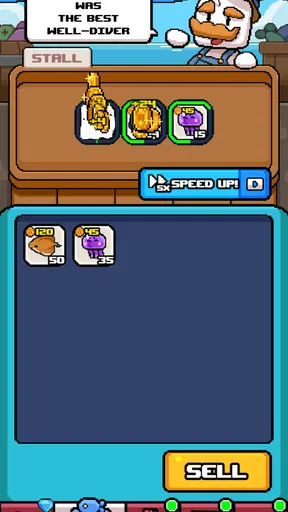
Unlocks and long-term rewards need to be viewed with realistic expectations. The available information presents WellDiver as an extreme survival adventure, but it does not establish a detailed inventory of upgrade trees, character classes, equipment tiers, or collectible systems. I would not buy into it expecting a large role-playing progression framework. Its appeal is better understood through repeated attempts, growing familiarity, and the pursuit of escape.
That limitation can be a strength. A complicated progression system often gives players a way to overpower problems through accumulation. A focused survival game asks me to improve my decisions instead. When that works, the satisfaction comes from solving the challenge rather than simply becoming stronger. The trade-off is that players who need frequent unlocks, new abilities, or a constant stream of rewards may feel that the loop is too restrained.
My practical advice is to define a small objective before each run. Instead of measuring the session only by whether I escaped, I might focus on avoiding one recurring mistake or lasting through a section that previously stopped me. This turns the game into a series of manageable experiments. It also prevents the common frustration of judging an entire session as worthless because the final outcome was not successful.
The current version is 0.12.2, which reinforces my recommendation to keep expectations measured. I would see this as an evolving, focused release rather than a finished, content-heavy adventure with every possible layer already in place. That does not make it a poor choice, but it does mean that players should value the core survival loop itself. If that loop is not enjoyable before a major escape, additional progression would probably not solve the problem.
Difficulty, pacing, and the point where tension becomes friction
The challenge works best when it creates a steady conversation between ambition and caution. I want to go farther because escape is the goal, but I also need to respect the danger of pushing too hard. That tension gives the pacing its shape. A run should not feel like a straight line toward a finish; it should feel like a sequence of decisions about whether the next step is worth the risk.
For me, the most important difficulty curve is psychological. Early failure teaches me that the ocean cannot be approached casually. Once I understand that, the game becomes less about reacting and more about planning. The challenge feels fairer when I can connect a bad result to a choice I made, rather than blaming an invisible rule. That is why careful observation matters more here than blindly repeating the same route.
There is a downside to this design. Repetition can become tiring if each attempt feels too similar or if the player cannot identify a meaningful lesson from failure. Survival games live or die by the quality of their feedback. When I know what went wrong, I am willing to try again. When I do not, another attempt can feel like paying an entry fee for the same disappointment.
I would play with sound attention rather than while multitasking. A game built around extreme survival and escape is unlikely to reward half-focused input. A noisy commute or a conversation-heavy room may make the experience feel harsher than it really is, because missed cues and rushed decisions can look like unfair difficulty. A quiet break is a better setting for judging the game properly.
The pacing also affects who should skip it. Players who want immediate action with no learning period may find the early sessions slower than expected. Conversely, people who enjoy studying a challenge and gradually becoming more composed under pressure may appreciate the deliberate rhythm. It is not the best match for someone searching for a purely casual time-filler where every attempt ends in obvious progress.
Compared with more conventional adventure games, WellDiver appears to place survival ahead of sightseeing, dialogue, or a large narrative journey. Compared with action games that use constant combat to maintain momentum, its appeal is the pressure of staying alive and reaching safety. That distinction matters when choosing it. If I want a story to carry me from scene to scene, another adventure game would likely serve me better. If I want the setting itself to create the problem, this approach is more interesting.
Retention pressure: what brings me back, and what may push me away
The reason to return is not simply that the game is free. The stronger hook is the unfinished escape. A failed attempt leaves a question behind: was the problem my route, my timing, my patience, or my decision to continue? That question can be enough to start another run, especially when I feel that success is within reach rather than completely hidden behind luck.
There is also a useful emotional shift between early and later play. At the start, the ocean feels like an unknown threat. After several attempts, it becomes a pattern I am trying to read. That change is a meaningful retention signal because it transforms fear into concentration. I am no longer merely surviving an unfamiliar place; I am testing whether I have learned its demands.
Still, retention can become pressure in the less positive sense. A survival loop may encourage me to restart immediately after failure, even when I am frustrated or no longer making careful decisions. I recommend taking a break when attempts begin to blur together. Returning with a clear objective is more productive than grinding through repeated runs out of irritation.
In-app purchases range from $1.99 to $49.99 per item. Since the game is free to start, I would first spend enough time with the basic experience to decide whether the survival loop genuinely works for me. The wide purchase range makes restraint especially sensible: do not treat spending as a substitute for understanding the challenge. If the core attempt-and-learn cycle is not holding my attention, an optional purchase is unlikely to change my opinion of the game.
The age rating of Everyone makes it approachable for a broad audience, but that should not be confused with a universally gentle experience. The presentation may be suitable for that rating while the survival pressure still frustrates younger or less patient players. I would introduce it to a child by emphasizing that failure is expected and that the goal is learning, not winning immediately.
Another practical question is device compatibility. The game requires Android 8.0 or later, so I would check the operating system before planning to install it. That is a small step, but it avoids the common disappointment of finding an appealing free game and discovering that an older phone cannot run it. On a supported device, I would also begin with a short session rather than assuming the game will fit my preferences from its premise alone.
My progression verdict after weighing the whole loop
WellDiver succeeds when I treat it as a concentrated adventure about mastering survival decisions. Its early goal is clear, its ocean setting supports the challenge, and its pacing encourages me to turn failure into information. The strongest progression is not an elaborate promise of endless content; it is the gradual change from panic to recognition, from guessing to choosing.
That focus will not satisfy everyone. I would skip it if I need a large story campaign, a clearly documented collection of unlocks, constant variety, or a low-pressure exploration experience. I would also be cautious about spending before I know that repeated survival attempts are enjoyable for me. The free entry point is useful precisely because it lets me answer that question without committing immediately.
I would recommend it to a friend who likes adventure games where the environment creates the tension and every run has a practical purpose. My advice would be to play patiently, set a small goal for each attempt, and judge progress by better decisions as much as by distance or escape. That mindset reveals the game’s best quality: it makes improvement feel personal rather than automatic.
LoadComplete has chosen a narrow concept, and the result is more appealing because it does not need to pretend to be everything at once. At version 0.12.2, I see WellDiver as a promising free survival adventure for players willing to learn its rhythm. It is at its best when the pressure feels understandable and the next attempt feels like a fresh test of judgment. If that sounds more exciting than a relaxed ocean tour, this is a focused adventure worth trying before deciding whether its progression has enough depth for you.
My final recommendation is simple: start with the free experience, play several thoughtful attempts, and pay attention to whether each failure teaches you something. If the answer is yes, the escape objective can carry the game surprisingly well. If the answer is no, the lack of a broader progression structure may become noticeable quickly. For the right player, WellDiver offers a compact ocean survival challenge with a clear reason to return; for everyone else, its focused design may feel more demanding than rewarding.
Pros
- Simple interface makes wellness tracking easy for beginners.
- Short sessions fit conveniently into busy daily routines.
- Progress features can encourage consistent healthy habits.
- Suitable for users seeking a gentle
- non-competitive wellness experience.
- Clear activity guidance helps reduce uncertainty during exercises.
Cons
- Some features may require a subscription or in-app purchases.
- Personalization options may feel limited for advanced users.
- Results depend heavily on maintaining a regular usage routine.
- The app may not replace professional medical or fitness guidance.
- Performance can vary depending on device compatibility and connection quality.
FAQs for WellDiver
What is WellDiver, and what can I use it for?
WellDiver is a wellness-focused application designed to help users monitor and improve aspects of their daily health routine. Depending on the version and available features, it may provide tools for tracking habits, recording personal information, following guided activities, or reviewing progress over time. Before downloading, check the current app description because available functions can vary by platform, region, and subscription level.
Is WellDiver free to download and use?
WellDiver may be available as a free download, but some features can require in-app purchases, a subscription, or an account. The free version may offer only basic tracking or limited access to content, while premium options could unlock additional tools and reports. Review the pricing details shown in the Google Play Store or App Store before starting a trial or entering payment information.
Does WellDiver provide medical advice or replace a healthcare professional?
No wellness app should be treated as a replacement for a doctor, therapist, nutritionist, or other qualified healthcare professional. WellDiver may help organize information, encourage healthier routines, or display general wellness guidance, but its suggestions should not be used to diagnose a condition or make urgent health decisions. Contact a professional whenever you have serious symptoms or concerns.
What personal information does WellDiver collect?
The information collected by WellDiver depends on the permissions you grant and the features you use. A wellness application may request details such as an email address, profile information, activity records, goals, or device-related data. Before creating an account, read the app’s privacy policy and check its permissions. Avoid entering sensitive information unless you understand how it is stored and used.
Is WellDiver compatible with my Android or iPhone?
Compatibility depends on your device model, operating system version, and the current requirements published by the developer. Before installing WellDiver, open its official listing on Google Play or the Apple App Store and confirm the supported Android or iOS version. You should also make sure your device has enough storage and that required features, such as notifications or health integrations, are available on your phone.


